4-Week Puppy Training Routine (Printable Starter Guide)
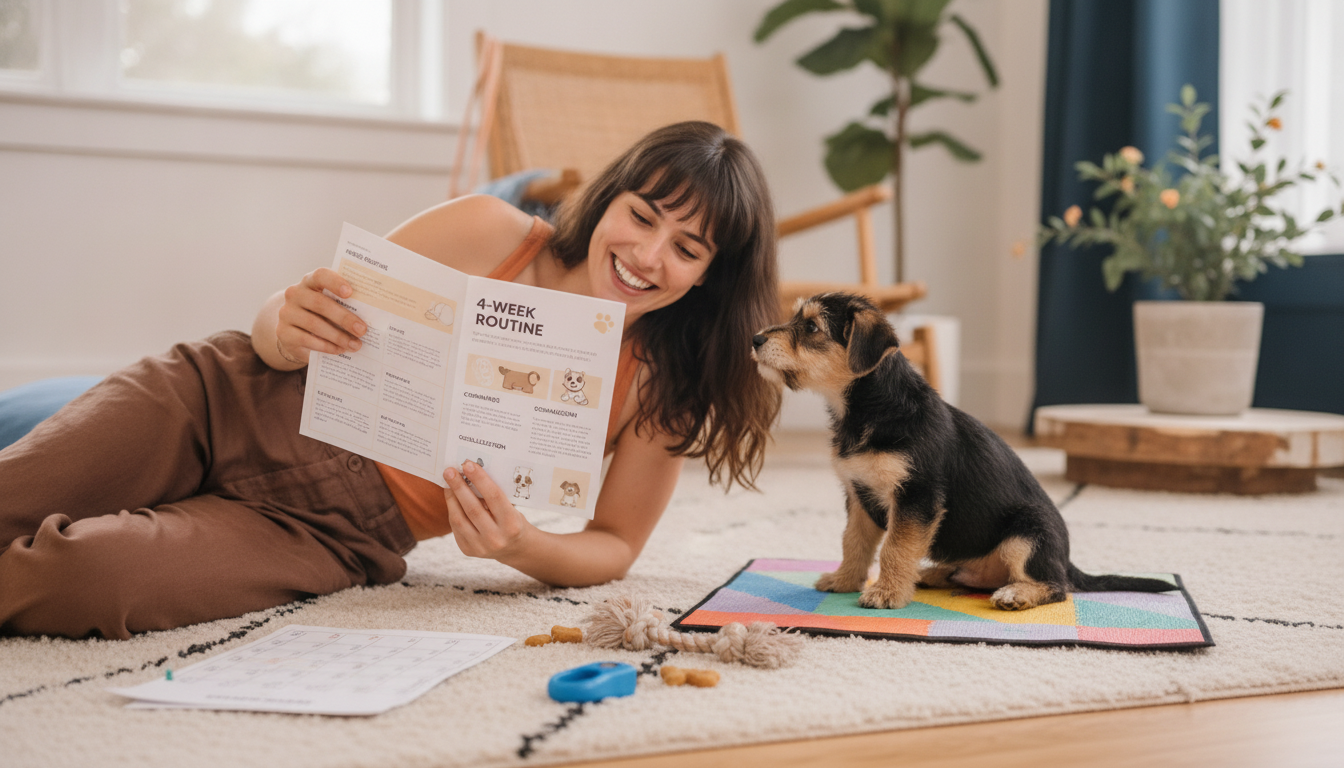
Bringing home a puppy is exciting, but the first month can feel like a blur of potty trips, biting, naps, and learning what “good” even looks like. A simple 4-week routine helps build confidence fast: clear daily structure, consistent house-training, short skill sessions, and safe socialization steps that fit a beginner household.
What “starter training” means in the first 4 weeks
Starter training is less about “perfect obedience” and more about predictable habits that make daily life easier. For brand-new puppies, priorities usually include a house-training rhythm, a realistic sleep schedule, early bite inhibition, name recognition, and calm handling (being touched on paws, ears, collar, and mouth).
Short sessions win because puppies learn best in tiny doses: 1–5 minute blocks repeated throughout the day beat one long session that ends in frustration. The goal is progress you can feel—fewer accidents, quicker settling after play, and a puppy who starts to look at you when you say their name.
Expectations also depend on the puppy in front of you. Bladder capacity, attention span, and confidence vary widely by age and temperament, so adjust the plan as needed rather than forcing a timeline.
Before day one: set up the home for fewer accidents and faster learning
The setup is training. Choose one confinement plan you can use consistently: a crate, an exercise pen, or a puppy-proofed room. Consistency matters more than the “perfect” option.
Create simple zones
- Sleep zone: quiet, low-traffic area for crate/pen naps.
- Potty exit path: clear route to the door so you can move fast.
- Play/training zone: easy-to-clean floor, minimal clutter.
- Chew station: only “legal” chews/toys live here, rotated daily.
Helpful supplies include enzymatic cleaner (essential), a treat pouch, a clicker (optional), a variety of chews (soft and rubber), baby gates, and a long line for safe outdoor practice. Finally, set family rules: where the puppy can go, what gets rewarded, and what gets ignored versus redirected. Mixed messages slow everything down.
A beginner-friendly 4-week routine (daily flow + weekly focus)
Most beginner routines work when the day has anchors you repeat: wake → potty → food/water → potty → play/training → nap. Repeat all day, keeping potty breaks predictable.
Sample Day Schedule (Adjust to Age, Vet Guidance, and Household Routine)
| Time Block | What to Do | Why It Helps |
|---|---|---|
| Morning wake-up | Immediate potty trip, then calm praise + treat | Prevents accidents and builds a clear potty routine |
| Breakfast | Feed, short training (name/touch), then potty again | Pairs meals with learning and reduces post-meal accidents |
| Mid-morning | Play + 1–3 minute cue practice, then nap in crate/pen | Builds skills without overtiring; naps reduce biting and zoomies |
| Midday | Potty, brief leash practice indoors, enrichment chew | Creates leash familiarity and independent settling |
| Afternoon | Potty, socialization exposure (safe/controlled), short nap | Gradually builds confidence and lowers fear risk |
| Evening | Potty, calm play, handling practice (ears/paws), final training | Makes grooming/vet handling easier and reinforces cooperation |
| Before bed | Final potty, quiet wind-down, sleep | Improves overnight success and reduces nighttime restlessness |
Weekly focus (keep training simple)
- Week 1: bonding, potty schedule, name game, gentle handling, crate/pen comfort.
- Week 2: “sit,” “down,” “touch,” and leash basics indoors; keep rewarding calmness.
- Week 3: “come” games, leave-it foundations, polite greetings, expand safe exposures.
- Week 4: proof basics with mild distractions, longer settle periods, smoother transitions (play → rest).
House-training: the routine that prevents most problems
Reward outside potty immediately—within 1–2 seconds after finishing. Keep rewards high-value early on. If accidents happen indoors, clean with enzymatic cleaner and avoid ammonia-based cleaners that can mimic urine scent. At night, younger puppies may need one boring overnight potty break: quiet trip out, then straight back to bed. For additional guidance, the ASPCA house-training guide is a reliable reference.
First commands and skills to teach (and how to keep them reliable)
Name response
Sit and down
Touch (hand target)
Come (recall games)
Play indoors first: run a few steps away, say “come,” and reward heavily when the puppy arrives. Never punish after they come—recall must stay safe and rewarding. The AKC’s puppy training basics has helpful examples of short, positive sessions.
Leave it / drop it foundations
Biting, chewing, and jumping: what to do in the moment
Socialization without overwhelm: confidence-building exposures
Follow veterinarian guidance on parvo risk. Use clean, controlled areas, carry your puppy in higher-risk places, and prioritize known healthy dogs and structured puppy classes. The AVSAB position statement on puppy socialization is a trusted overview of why early, positive exposure matters.
Using a printable guide to stay consistent (especially for beginners)
For a structured plan you can post on the fridge, use the New Puppy Training Starter Guide (Printable 4-Week Routine).
Common mistakes that slow progress (and quick fixes)
Helpful add-ons for busy puppy days
When you’re running out for frequent potty trips, having quick, reliable basics can make the routine easier to maintain. If you want simple grab-and-go options, consider everyday footwear that’s easy to slip on near the door, like Vans Women’s Fuchsia Leather & Canvas Shoes or Adidas Men’s Black Suede Sneakers.
When to get extra help
FAQ
How often should a new puppy go outside for potty breaks?
Use frequent, predictable trips: after waking, after eating/drinking, after play, and before/after confinement. Many puppies need breaks every 1–2 hours at first, then gradually longer as consistency improves.
What are the most important commands to teach in the first month?
Prioritize name response, touch, sit, down, and recall games (“come”). Add leave-it/drop-it foundations to support safe chewing and prevent grabbing unsafe items.
How can socialization be done safely before all vaccines are complete?
Follow vet guidance, prioritize controlled exposures (sounds, surfaces, handling, calm people), avoid high-risk dog areas, and use distance and treats so the puppy stays relaxed and curious.











Leave a comment